
Suicide prevention: why we talk about mental health
Managing Director Richard Moore on stigma, the Samaritans, and why open conversation is the first step for businesses and the people in them.
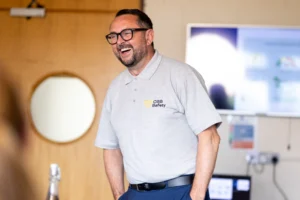 CSS Safety
Suicide ruins lives and destroys families. Every day in Great Britain and Ireland over twenty people choose to end their lives, for a variety of reasons. 75% of suicides are male, brought on by feelings of failure and rejection.
This also has a devastating impact on businesses, destroying confidence and leaving those left behind with unanswered questions, and directors and managers asking "Could I have done more?", "Did we contribute to this?" and "How did I not spot the signs?"
Where this comes from
Managing Director Richard Moore grew up in a house affected by mental health issues, and remembers crucially not the conditions but the stigma being the major problem. The wall of silence and feelings of shame became a tremendous pressure that everyone carried, for no reason.
Mum's health was never an issue. The only problem was others' lack of understanding, and the feeling that we could never talk about it, or any mental health subject.
Richard Moore, Managing Director
These experiences in early life led to Richard becoming a Samaritan later on. The training and real-life scenarios confirmed what Richard suspected: mental health is still a stigmatic subject, yet the mind is no different to a knee or an elbow.
The more we talk about mental health, the easier the subjects become and the more we can help people. For businesses, doing the right thing has never been easier. There are lots of ways we can help people reach out. The first step is normally the hardest.
Richard Moore, Managing Director
Related Resources
Innovation in highways safety: our award-winning work
National awards in 2017, 2018 and 2020 for safety video training, vehicle incursion warning and remote-monitoring technology.
Mini Medics: first aid and mental health training for children
A half-day introduction to first aid and mental health for children aged 7 to 11, and a safe, engaging way to fill…
Choosing a fire safety consultant
A simple checklist for HR leads booking group safety training for the first time.